Showing posts with label policy. Show all posts

Wednesday, March 16, 2011

On Public Process: The Interaction Between Local Government and Citizenry


Last week, I attended a city council zoning commission hearing. I attended this meeting with other members of the Living Streets Alliance. This was the culmination of weeks of efforts on the part of Tucson Velo, the Living Streets Alliance and a variety of other local activists.

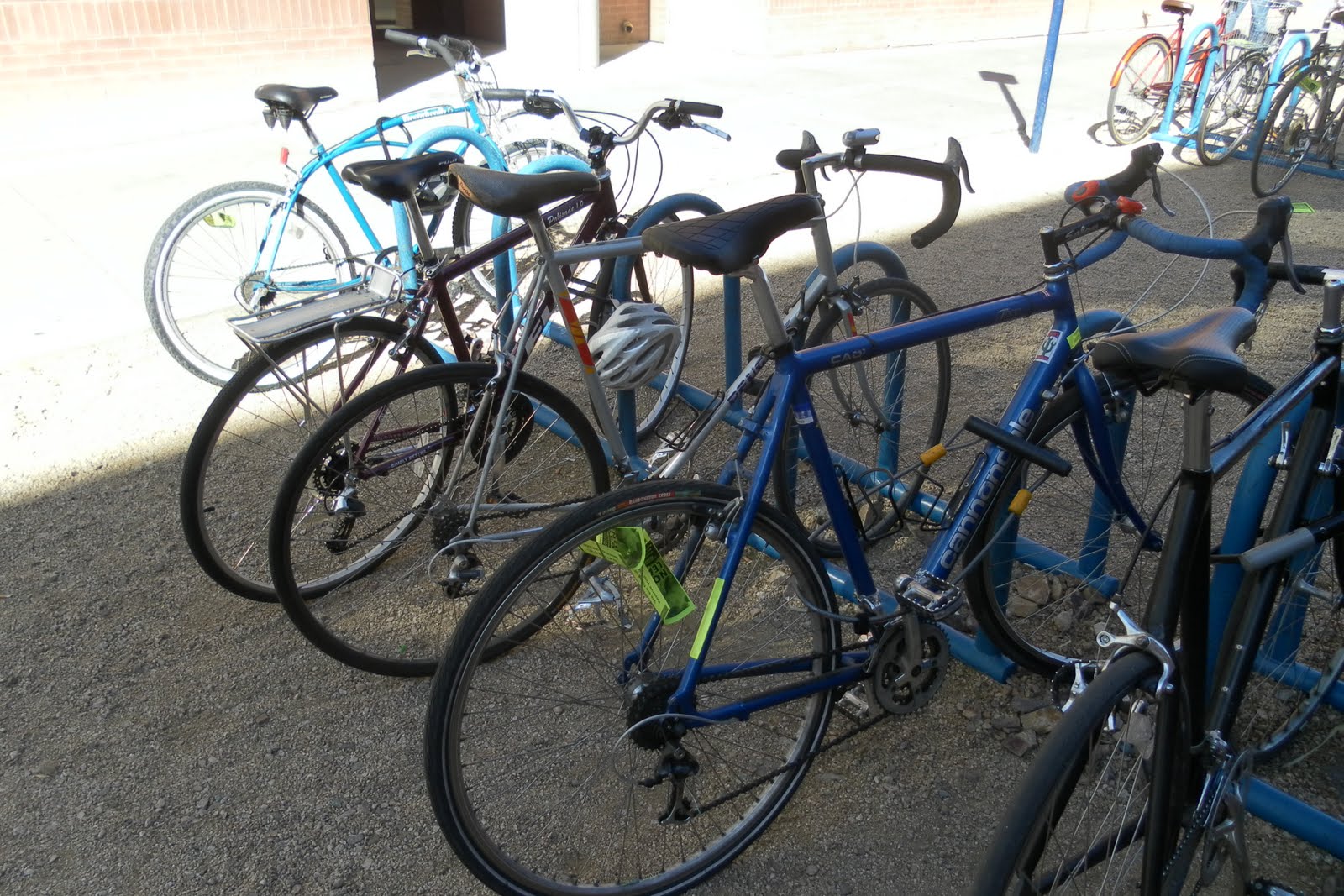
The reason we were at this meeting was bicycle parking policy. The city was trying to pass a revision to the city zoning code that would push bike parking to the periphery of certain developments. The specific section of code states that in certain situations, business owners could push bike parking as far as 75 feet away from the front door. The current maximum is 50 feet; 50 feet is the national standard. Locating a bike rack 75 feet from the door of a business could could result in bike racks being placed in an unsafe side of building location. The lack of visibility would probably result in much lower usage of these facilities as well, making them a waste of money.

Picture from Tucson Velo; taken at the City Council meeting

First, the good: the city council voted to extend the vote for another two weeks so the needs of the bicycle community could be discussed and met. As Tucson Velo later reported, this resulted in a compromise between the city and bike representatives.

Now, the irony: this zoning code was primarily about reducing parking minimums! I was unaware of this fact before walking into this meeting. After hearing this zoning revision discussed, I could only imagine how the city council felt: here was a group of stakeholders who probably wanted these parking minimums to begin with, protesting the passing of a really progressive zoning policy. I hope, and think, they understood where we were coming from.

Why pass an imperfect policy if we could make it better? This, after all, is the whole point of the democratic process. However, the city council was wondering why this problem wasn't hashed out during the multi-month long process of the development of this zoning amendment. This process included many bike related stakeholders as well.

One theory: Jason Wong, a developer who was pushing really hard for the city council to pass the zoning revision that very night. Some believe that he stuck in the regressive bike parking exemption at the last minute.

Whatever the reason, the city council meeting was fascinating. The whole process, from the introductory Pledge of Allegiance to colorful local city residents speaking up about various issues, was eye opening. This was my first Tucson city council meeting and it probably will not be my last.

It was encouraging to see democracy work effectively to resolve conflicts between stakeholders. I think we sometimes forget that the ineffective federal Congress is not the only governing body in the country. Local level government is filled with passionate people who intimately understand the local issues. I am happy to report that the Tucson city council, at least in this example, is of the people, by the people and for the people.
Saturday, March 5, 2011

My Appearance on the Local News, Discussing Bicycle Parking Policy


As discussed in the previous post, here is the news story about bike parking that I was interviewed for. I am on the video next to the article as well.

I appear about one minute into the video version of this story.

Thanks for watching!

Thursday, October 14, 2010

New Title, New Vision, New Ideas


Here I am, back again.

I have not written in a very long time. This is due to the fact that I am in EspaƱa (Spain)! I will be in Europe until early January and then return to the University of Arizona for one and a half more semesters.

The first item I would like to address is a project I have been working on with Parking and Transportation Services at the University of Arizona. Last year, I noticed an interactive map on the PTS website. It had some neat features, such as traces for various buildings on the campus, maps of parking zones and CatTran routes. However, the map left me wanting more transportation information, especially for SunTran, the Tucson city bus.

I visited PTS and talked to the person who created this map. He liked my ideas so much that he decided I should add the things I wanted to the map! How about that for innovative collaboration?

Though I made quite a few changes, the major ones were adding more SunTran stop icons (all stops within close vicinity of the U of A campus) and adding stop information to all of the stops (both SunTran and CatTran). Also, this map is now linked directly to the U of A home webpage. Here is the current live version of the map as it exists now. I am now listed as a collaborator. Though I have more ideas about things to add, I will wait until next semester to address them.


So, back to the title of this post.

New Title: I decided to change the title of this blog (yet again) to "Urban Transport Revolution: Ideas for a More Intelligent Future". Why the name change?

The new name is more broad because my posts and ideas have become more broad. Though I am primarily interested in transportation, I am also interested in EVERY facet of urban life.

In addition, transportation does NOT exist in an isolated bubble; its success or failure depends on a huge variety of factors, with walkabiltiy being a huge part of the equation. Changing the current paradigms of American transportation policy will truly require a revolution. Though some cities and states are beginning to understand the work necessary, there is a long struggle ahead of us.


New Ideas: Maybe there are not new, but they are important.

Walkable mixed-use density = successful transit. This equation may look simple, but it is incredibly complicated. Some think density is the primary factor in transit success, but it's only one part of the equation. If these dense areas are:

a) dense single use and not mixed use (miles of apartment buildings without a grocery store)
OR
b) dense and not walkable (divided up by lots of fences, walls, major busy streets, etc.)
OR
c) walkable but not dense (dense is a vague quantifier, but basically anything with only single family homes)
OR
any other combo, transit is not guaranteed success. Sure, there are a few examples of these outlier patterns leading to quality transit ridership, but they are not easy to find.

Jarrett Walker, in his blog Human Transit, goes into these issues with more depth.

Once the governments controlling the cash understand the connections between all these things (plenty of other people [PDF] already do), the revolution can begin.

Anyway, that's all for now. Hopefully, I will be posting more often now.

Ciao!

Sunday, February 7, 2010

The Extreme Importance of Zoning Policy

The cities we have created today are relatively unsustainable. By unsustainable, I mean a place that can not easily survive for a long period of time. The primary reason behind this is zoning policy.

There are two major issues with current zoning policy:
1) Subsidizing Sprawl: We continue to pour money into developments that make our city weaker instead of stronger.

We can even look at this kind of development from a purely economic standpoint: In the long run, it is far more expensive to construct and maintain new infrastructure than it is develop areas that already have infrastructure. For this reason, local and national government should give major tax breaks to infill development, opposing to greenfield sprawl. In places where infrastructure exists, other services (such as shopping, workplaces, schools, etc.) are likely to exist as well. This not only creates lower longer-term prices for taxpayers, but it also encourages and stimulates walkable development. As many studies have shown (the most recent one from the NRDC), walkable areas retain value much better than non-walkable areas do.

2) Single Use Automobile Dependent Zoning Policy: Most new development in the United States continues to be single use and car dependent. This kind of development is a major reason why the obesity rates in the United States have skyrocketed. Creating areas and communities where people do not have the option of walking, biking or using public transportation is detrimental to the health of this country.

America prides itself on the freedom and independence car ownership provides, but car ownership should not be (and is not) a necessity for everyone. In my opinion, freedom means building areas where people have the freedom to use any transportation option they want.

Federal and local governments MUST revise zoning policies that encourage single use car dependent developments. Continuing to build these spaces will just lead to more pollution and congestion on local roads, and the eventual collapse of local transportation systems. Only so many lanes can be added to a road; eventually, the right of way ends.


Let's Review:

We must fight to end tax subsidies for sprawl.

We must subsidize infill development instead.

Car dependent development weakens our country.

Freedom means transportation options, not automobile dependency.

Revising zoning policy is crucial to the future of this country.


In my next post, I will address a balanced solution for future suburban growth that embraces the tenets of progressive urban policy.