Showing posts with label local. Show all posts

Wednesday, March 16, 2011

On Public Process: The Interaction Between Local Government and Citizenry


Last week, I attended a city council zoning commission hearing. I attended this meeting with other members of the Living Streets Alliance. This was the culmination of weeks of efforts on the part of Tucson Velo, the Living Streets Alliance and a variety of other local activists.

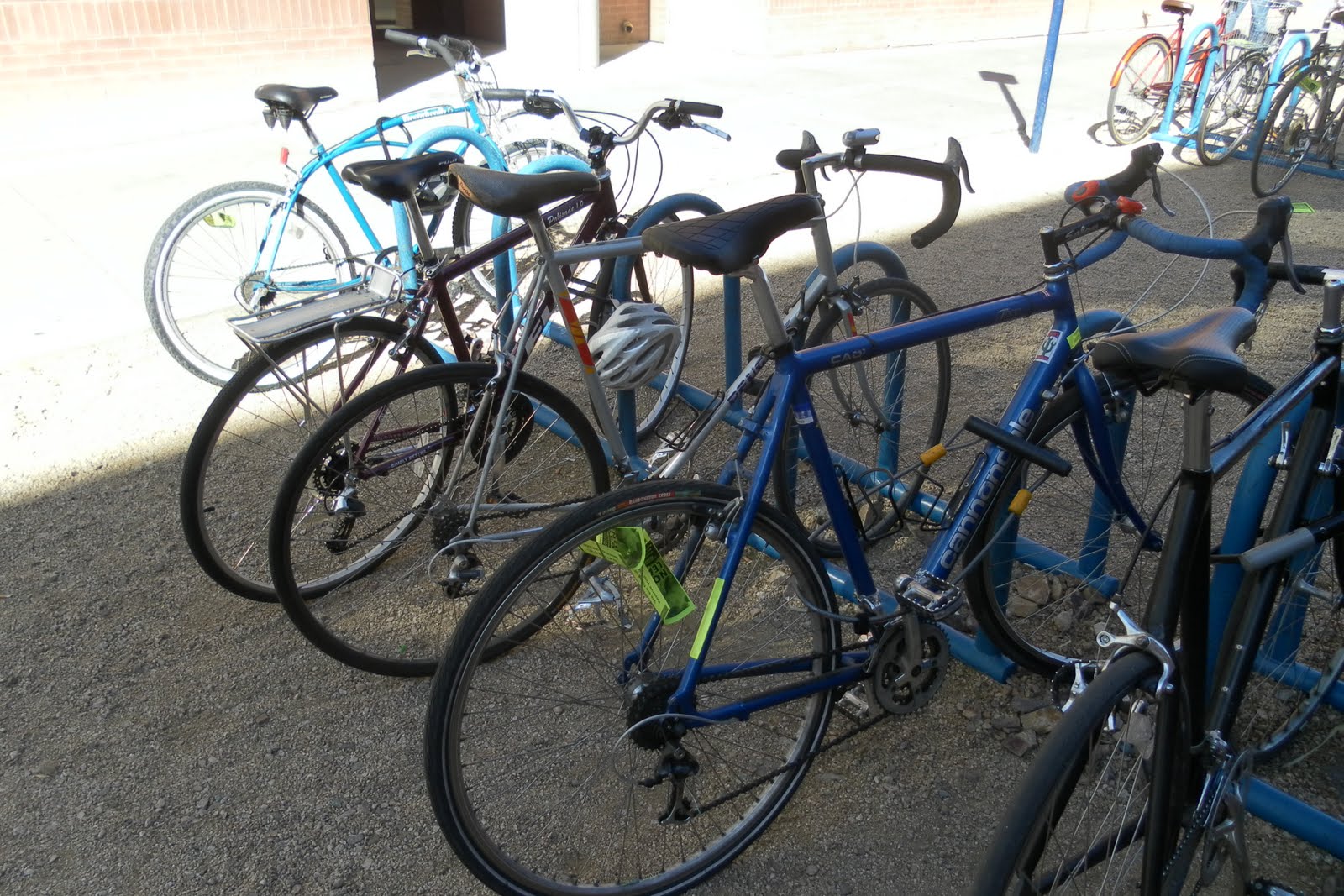
The reason we were at this meeting was bicycle parking policy. The city was trying to pass a revision to the city zoning code that would push bike parking to the periphery of certain developments. The specific section of code states that in certain situations, business owners could push bike parking as far as 75 feet away from the front door. The current maximum is 50 feet; 50 feet is the national standard. Locating a bike rack 75 feet from the door of a business could could result in bike racks being placed in an unsafe side of building location. The lack of visibility would probably result in much lower usage of these facilities as well, making them a waste of money.

Picture from Tucson Velo; taken at the City Council meeting

First, the good: the city council voted to extend the vote for another two weeks so the needs of the bicycle community could be discussed and met. As Tucson Velo later reported, this resulted in a compromise between the city and bike representatives.

Now, the irony: this zoning code was primarily about reducing parking minimums! I was unaware of this fact before walking into this meeting. After hearing this zoning revision discussed, I could only imagine how the city council felt: here was a group of stakeholders who probably wanted these parking minimums to begin with, protesting the passing of a really progressive zoning policy. I hope, and think, they understood where we were coming from.

Why pass an imperfect policy if we could make it better? This, after all, is the whole point of the democratic process. However, the city council was wondering why this problem wasn't hashed out during the multi-month long process of the development of this zoning amendment. This process included many bike related stakeholders as well.

One theory: Jason Wong, a developer who was pushing really hard for the city council to pass the zoning revision that very night. Some believe that he stuck in the regressive bike parking exemption at the last minute.

Whatever the reason, the city council meeting was fascinating. The whole process, from the introductory Pledge of Allegiance to colorful local city residents speaking up about various issues, was eye opening. This was my first Tucson city council meeting and it probably will not be my last.

It was encouraging to see democracy work effectively to resolve conflicts between stakeholders. I think we sometimes forget that the ineffective federal Congress is not the only governing body in the country. Local level government is filled with passionate people who intimately understand the local issues. I am happy to report that the Tucson city council, at least in this example, is of the people, by the people and for the people.
Saturday, March 5, 2011

My Appearance on the Local News, Discussing Bicycle Parking Policy


As discussed in the previous post, here is the news story about bike parking that I was interviewed for. I am on the video next to the article as well.

I appear about one minute into the video version of this story.

Thanks for watching!

Saturday, August 28, 2010

Goodbye ABQ Ride, Hola España


I have not posted for a long time. This has been due to the fact that I have been extremely busy working at the ABQ Ride offices and preparing to study abroad in Alcala de Henares, España.

This summer, I had a paid internship at ABQ Ride. During my time there, I managed to accomplish my major goal: to resign the ABQ Ride System Map. To give you an idea of the major changes I made to the system map, here is the old one:


As you can see, it is hard to read, cluttered and complicated. Here is my new one:


If you want a direct link to the map on the ABQ Ride website, here is the location.

My priorities for the revised map were an easy to read key and cleaner, less cluttered lines. Another priority I had was showing a better distinction between the lower frequency routes and the higher frequency routes.

Interestingly enough, almost as soon as I was done with the new map, Jarrett Walker of Human Transit wrote a great post about the importance of frequency-based transit maps. Local blogger John P. of Carfree in 'Burque wrote a post in response to the Human Transit post; it included an ABQ Ride Frequency Map. Johns map happened to include many of the elements I added to the new map. This entire situation highlights the potential power of the interconnected Internet to influence ideas and policy.

Though I admit my new map is not perfect, it was the best I could do with the time and resources provided to me.

In addition, this summer I also created 4 other ABQ Ride maps for each of the major system transfer/transit centers: Alvarado, Uptown, Northwest and Central & Unser. Other than the Alvarado map, none of these maps previously existed in any form. I hope these documents can help people more easily navigate the ABQ Ride system.

This summer, I learned many things about life in the office, transit planning, politics, bureaucracy, transit funding, the City of Albuquerque, ABQ Ride and many other things. There is one very important point I would like to write about at this juncture; it is a major difference between the transit system in Tucson (SunTran, which serves an average of 13,534 daily riders) and ABQ Ride (which serves an average of 7,948 daily riders).*

Since both metro areas have a very similar population (and similar demographic indicators as well), one would expect similar ridership. What gives?

Local geography helps to explain the differences: in Albuquerque, the city is divided up by 2 major interstates (1-25 and I-40) + Paseo del Norte + the Rio Grande river basin; in Tucson, the street grid is relatively well connected, with the only major freeway (I-10) skirting the edge of town.

There is also another reason for the difference:

Regional vs. local.

Tucson has a single REGIONAL transportation system. This means that there is one service provider for all the local transportation needs. This makes sense, as Tucson is a relatively small isolated metropolis.

Albuquerque, on the other hand has both a REGIONAL and LOCAL transit provider: ABQ Ride is local, while Rio Metro (the group running the Rail Runner) is regional. This means that funding is DIVIDED between these separate agencies.

How can Albuquerque expect to create a seamless, efficient network when the cash is split up between two different agencies? Though this issue may not be the deciding factor behind the ridership differences in these two cities, I believe it is an important issue that should be discussed by local leaders. After all, I'm not sure Tucson would have received federal dollars for their modern streetcar project without the unified force of a REGIONAL transportation system.

This was my major observation about ABQ Ride vs. Tucson/Suntran vs. regionalism/localism vs. transit networks in general.


Anyways, that all has come to an end and I am now in Spain. I will be here for the remainder of the year, studying Spanish and other assorted things. I will try to blog as often as possible, but I will be studying full time so we shall see.

So, as always, IT'S TIME FOR A TRANSPORTATION REVOLUTION!

---

*All the data used was acquired from the Brookings Institute website from the interactive State of Metropolitan America Indicator Map. If you have not played around with this incredible interactive data set DO SO NOW! It is chock full of interesting, interactive demographic data from across the United States. Have fun!